Finnish sheep breeds
The Finnsheep
Name: Finnsheep.
Native name: Suomenlammas.
Weight: 85-105 kg (rams), 65-75 kg (ewes).
Appearance/Colour: Medium-sized. Typically polled. The colouring varies: different colour lines are maintained separately. White is most common, but brown, black and grey can occur.
Number of offspring: multiple: 2 (40%), 3(40%), 4 (10%) 5 (2%).
Birth weight: 3,7 kg with an average growth of 222 g per day.
Number of breeding females in Finland (2024): 38.000.
Not at Risk – Vulnerable – Enangered – Critically Endangered – Extinct

The Kainuu Grey
Name: Kainuu Grey.
Native name: Kainuunharmas.
Weight: 55-65 kg (ewes), 65-85 (rams).
Appearance/Colour: Medium-sized, can be horned or polled. A typical breed characteristic is a violet tint to the skin and tongue. The colour varies from white to various shades of grey and black, normally with black legs and head. Lambs are usually born black but can occasionally be brown (these grow into grey or beige adults with darker brown legs and head).
Number of offspring: average of 2,61 lambs per ewe.
Birth weight: 3,7kg with an average growth of 200g per day.
Number of breeding females in Finland (2024): 4600.
Not at Risk – Vulnerable – Enangered – Critically Endangered – Extinct

The Åland Sheep
Name: Åland sheep.
Native name: Ahvenanmaanlammas.
Weight: 42-65 kg (ewes), 65-85 kg (rams).
Appearance/Colour: Short and compact, horned (different sizes) or polled. The main colours are white, different shades of grey (including a dark blue-grey nuance), beige (with either a red-brown or orange tint), brownish grey, and black. Many individuals are born black or dark grey but change colour during their first year of life. White markings on the head and legs are common.
Number of offspring: average of 2,1 lambs per ewe.
Birth weight: 2,9 kg with and average growth of 204 g per day.
Number of breeding females in Finland (2024): 4100.
Not at Risk – Vulnerable – Enangered – Critically Endangered – Extinct

Short background
There are three native sheep breeds in Finland: Finnsheep, Kainuu Grey and Åland sheep. It is not known exactly when the early ancestors of the Finnish landrace breeds arrived in Finland, but sheep and/or goats were kept there at least as early as the end of the Stone Age, around 4,000 years ago. Finnsheep, Kainuu Grey and Åland sheep are descendants of the North European short-tailed breeds and have developed without interbreeding with more recently introduced breeds.
The Finnsheep originates from animals in eastern Finland that were valued for their desirable size. Today it is the most common sheep breed in the country, a prevalence reflected in its “not at risk” conservation status. The breed is especially popular for its high fecundity, a characteristic that has attracted global interest; Finnsheep have been exported to more than 40 countries.
The Finnsheep is closely related to Kainuu Grey and to certain northwestern Russian breeds. With regards to Åland sheep, this breed was once thought to be a regional form of Finnsheep, but genetic studies have demonstrated that they are in fact a distinct breed with their own unique characteristics. Having lived for centuries on the barren islands of the Åland archipelago, they have developed special adaptations to local conditions. Both the Kainuu Grey and Åland sheep are classified as “vulnerable” in terms of conservation status.
Despite their genetic distinctiveness, the three native sheep breeds exhibit many shared characteristics. They are described as lively and curious animals, well adapted to the Finnish climate. They are also regarded as versatile and efficient, making them particularly suitable for landscape management. All three breeds serve multiple purposes and are considered highly valuable.
Uses and important characteristics of the Finnish sheep breeds
Originally sheep were kept primarily to provide food and clothing, but after the mid-20th century the focus shifted toward their multi-purpose use including meat production, wool and hide for clothing, premium animal materials for example for handicrafts, and landscape management.
Carcass
Slaughter characteristics in both Finnsheep and Kainuu Grey are generally considered fair. The Kainuu Grey exhibits a low tendency to fatten, with fat primarily deposited in extramuscular areas, making it easier to remove. In recent years, improvements in the breed’s muscularity have been observed. For Åland sheep, meat quality varies considerably due to differences in body size, ranging from small to relatively well-developed individuals. Nonetheless, slaughter carcasses are typically described as satisfactory.
Wool
Both the Kainuu Grey and the Åland sheep have a two-layered fleece consisting of ground hair and guard hair (also referred to as wool-type and fur type fibres). In the Kainuu Grey, wool quality varies between individuals, and even a single animal may produce different types of wool. The finest wool of this breed is described as having a pearlescent sheen, while the fur-type wool is fluffy with large curls. Wool and pelts in a variety of colours are especially valued for direct sale.
The Åland sheep also have a fine ground hair and coarse guard hair, with considerable variation between individuals. They produce wool in high quantities, and the finer fibres often display a sheen similar to the Kainuu Grey wool.
The Finnsheep fleece consists primarily of ground hair, with only small amounts of guard hair. The wool is regarded as one of the best wools for felting and is highly appreciated in arts and crafts for its shine, flexibility, and softness. On average, an adult sheep produces about three kilograms of wool per shearing.
Suitability for landscape management
All three native breeds are suitable for landscape management. The Kainuu Grey and the Åland sheep are described as agile and durable animals, with the Åland sheep showing a preference for herb-rich pastures and a willingness to range over large areas when grazing. The Finnsheep are particularly well suited for grazing in forests, pastures and parks. Finnish sheep breeds have also been successfully used in targeted projects to control invasive plant species.
Maternal traits
Maternal traits are generally described as good across all three breeds. The Kainuu Grey sheep show strong mothering abilities and good milk production, and they usually produce multiple lambs. As with carcass characteristics, however, the maternal traits can be variable. The Finnsheep are noted for exceptionally strong maternal performance and are regarded as one of the most fertile sheep breeds worldwide. They exhibit high ovulation rates and large litter sizes, supported by a uterine capacity that can accommodate multiple healthy foetuses. The breed is also capable of breeding year-round and is recognized for its excellent maternal instincts and milk production.
Health and temperament
The native breeds are generally healthy and resilient animals, characterised by a lively and curious nature. The Kainuu Grey and the Finnsheep are considered friendly and easy to handle, with the Finnsheep also exhibiting a particularly strong herd instinct. The Åland sheep are described as brave and manageable, though they display a weaker herd instinct than the Kainuu Grey and Finnsheep.

Conservation
The Finnish Sheep Breeders Association, established in 1918, promotes the breeding and conservation of sheep breeds in Finland. Since 1988 Association of ProAgria Centres is running herd book for these breeds. As of 2024, the Finnsheep is classified as “not at risk”, whereas the Kainuu Grey and Åland sheep are considered vulnerable. Both the Åland sheep and the Kainuu Grey were previously endangered. Conservation efforts for the Kainuu Grey were initiated by Pertti Hankonen in the 1980’s and gained momentum after DNA studies in the early 2000s confirmed the breed’s genetic distinctiveness. In 2020, 1,193 purebred breeding ewes were recorded. The current focus is on controlling inbreeding, preserving characteristic colouration, and grazing ability, and maintaining fertility. Additional breeding goals include improving meat and wool quality. Accordingly, the breeding program monitors health, fertility, maternal traits, slaughter characteristics, conformation, wool and pelt quality, and growth rate.
Similar conservation efforts were undertaken for the Åland sheep. Sven-Olof Eriksson begun collecting animals from different parts of the Åland archipelago, thereby saving the remnants of the breed. Growing interest in native breeds subsequently increased the population, and today Åland sheep are found both on the Finnish mainland and in the Åland Islands. The breeding association Föreningen Ålandsfåret RF is currently responsible for managing the breed.
According to the Association of ProAgria Centres, there are 73 sire lines within the Finnsheep, of which 44 are actively maintained. While some of these sire lines are endangered, the breed as a whole is not considered at risk. Nevertheless, Finland actively supports the conservation of its native sheep breeds through living gene bank and cryobank of genetic material. The continued use of the local sheep breeds in the national industry also contributes to the preservation of Finnish native sheep breeds, all of which are eligible for agricultural subsidies that promote the raising of traditional livestock.
Characterisation in research
Research activities aimed at characterising breeds are an important part of the conservation of animal genetic resources. Characterisation helps to determine whether a breed possesses unique characteristics that may be valuable for securing future food production. A comprehensive review by Kierkegaard et al., (2020) reported that, up to 2019, 17 characterisation studies had been conducted on Finnish sheep breeds – seven on the Kainuu Grey and 10 on the Åland sheep. For the Åland sheep, most of the studies focused on molecular genetic diversity between breeds, whereas for the Kainuu Grey, the emphasis was on phenotypic characterisation. Although Kierkegaard et al. (2020) did not include the Finnsheep, this breed has also been investigated at the molecular level, both within and between breeds. These studies have shown that the genetically closest relatives of the Finnsheep are the Karelian landrace populations of Western Russia. Molecular genetic data, together with estimates of inbreeding and effective population size, indicate that the Finnsheep is a genetically healthy breed with relatively high within-population diversity. More recently, a doctoral dissertation provided new insights into the function of genes related to female fertility and the genetic characteristics of native Finnsheep (Pokharel, 2020).
Further investigation and characterisation of additional genes and important traits in sheep is necessary to improve future management and conservation of the breeds. Since these breeds also form a part of Finland’s cultural heritage, it is equally important to explore historical knowledge of their development and significance for human societies. To date, only a few studies have documented the socio-cultural importance of the Finnish sheep breeds. By securing more in-depth socio-cultural knowledge, we are not only strengthening conservation efforts but also enhancing our understanding of broader societal development.
Fun facts
- The Finnsheep is one of the most fertile sheep breeds worldwide, and capable of breeding throughout the year.
- Both the Åland sheep and Kainuu Grey sheep are known to change colour when they mature.
- Before the invention of Gore Tex, the high quality wool of short tailed European sheep breeds was valued for its natural water resistance; wool from the Åland sheep, in particular, was traditionally used for making sails.
Read more about our other native breeds
-
The Faroese sheep
The Faroe Islands are home to a single native sheep breed - Føroyskur seyður (the Faroese sheep). Today, sheep still play a vital role in Faroese society, outnumbering humans on the islands: approximately 70, 000 sheep to 54, 000 people .
-
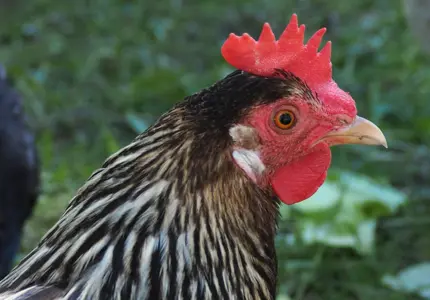
Finnish Landrace Chicken
In 1974, the agricultural advisory agency collaborated with Seiskari and published a call to find remains of the Finnish landrace chicken. As a result, one flock was found in South-East Finland. This family line was named after its geographical location as “Savitaipaleenkanta”.
-
Finnhorse
The oldest single horse bone found in Finland is dated to the Bronze Age. According to the latest research, the earliest family roots of the Finnhorse are directed to the east.